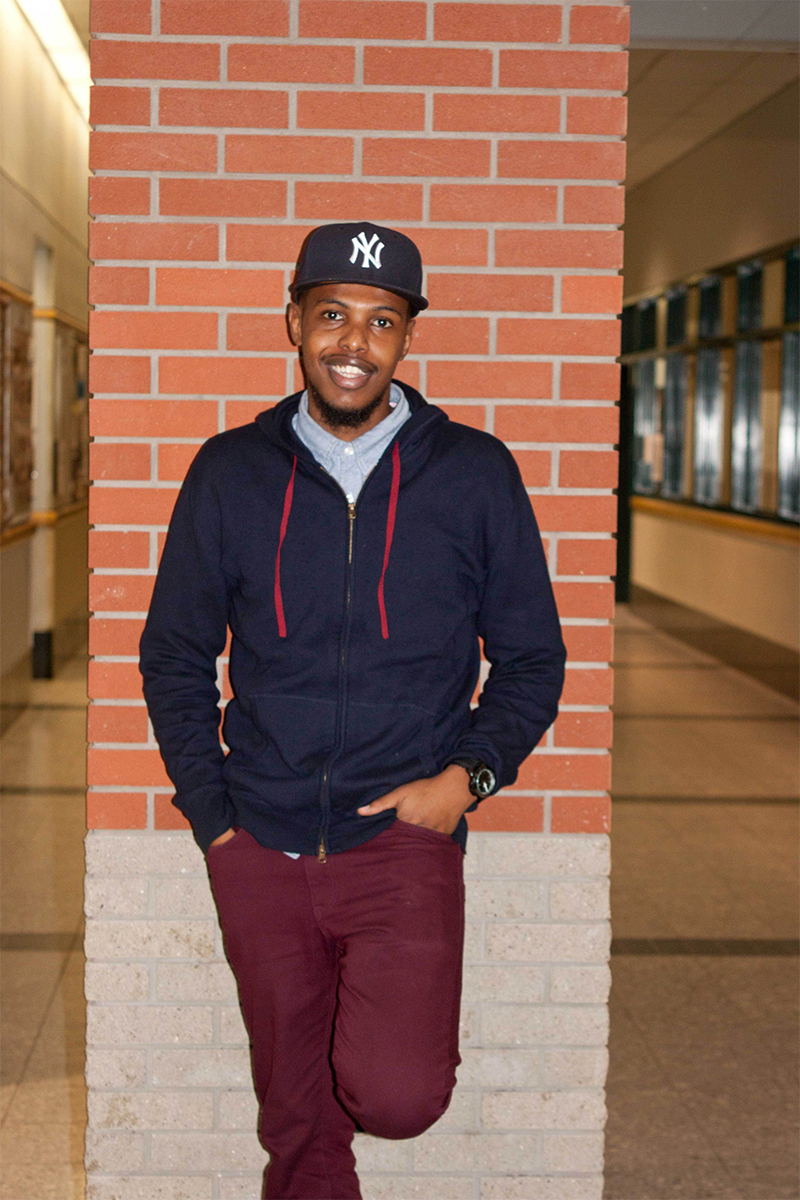
D. C. Johnson
Arts Editor
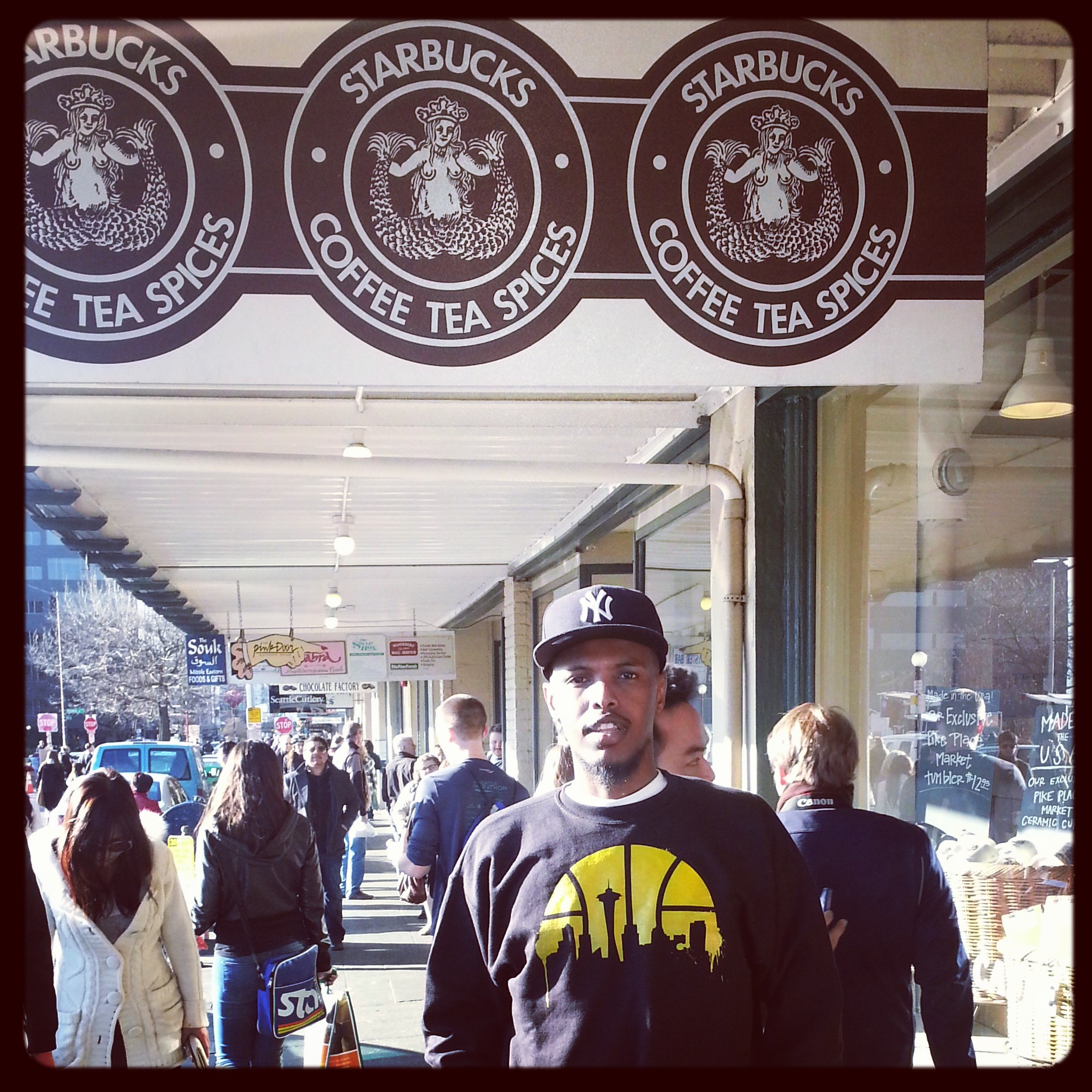
What: Spoken word artist Ahmed Knowmadic
Where: The Carrot Community Coffee House (9351 118 Ave.)
When: Feb. 22, 7:30 p.m.
Price: $5 donation at the door
Inspiration is like a drug for artists, says Ahmed Ali. But the Somali-Canadian spoken word poet never seems to run out of fodder — this might stem from his background.
Ali’s alias, Ahmed Knowmadic, reflects both the poet’s love of wordplay and the wanderlust that has permeated his life.
“Now I’m moving from place to place for knowledge. So now, instead of being a nomad, I’m a knowmad,” he says.
“Now I’m chasing knowledge, and I’m spreading knowledge instead of chasing herds or animals.”
When Ali was four, his father, the first of his family to give up the nomadic lifestyle for the city, moved his family to Italy.
At age eight, Ali and his family picked up and left again — this time for Canada. Ontario, specifically. Because of the move, the 2011 Canadian champion of spoken word took English as a second language for four years.
In 2008, Ali moved to Edmonton and began studying political science and psychology. Though he had been writing since the age of 16, Ali wanted an outlet for his creativity.
His girlfriend suggested that he perform at the Edmonton Poetry Festival — he bombed, but that didn’t stop him.
Ali’s gotten better since, and now works as a full-time poet. This career choice involves less-than-standard fare: voluntarily running the poetry night at Rouge Lounge, performing in different cities and putting on workshops in schools around the country.
“When I do workshops, I try to get the idea across that everyone is a poet,” he says.
This attitude and his poetry seem to strike a chord with the students he teaches. Ali recalls, after reciting poetry during a workshop, a kid in a Slayer t-shirt came up to him in tears.
Often, the poet is inspired by youth, rather than adults. Once, a high school student wrote a striking poem. Afterward, a teacher came up to Ali and told him that the student was shy and never spoke in class — the beauty and passion behind the piece shocked Ali.
Traveling and teaching aside, Ali draws inspiration from what’s happening in the world — perhaps this is a product of his time in poli-sci.
He has appeared at Palestinian solidarity events, and has recently begun working on a poem about the Idle No More movement. With his work, Ali wants to act as a “freedom fighter” and a “truth seeker” and send a positive message and wisdom to wherever he finds himself.
Before the poet puts pen to paper, he meticulously researches the topic about which he writes. However, Ali purposefully injects elements of himself into his work.
“Otherwise, it just comes off as me just trying to impress people with words,” he says.
But not all of Ali’s work is political. The 28-year-old’s long list of experiences affords his work a level of variety.
The poet notes that, while some people cry at the injustices in his poems, a poet needs diversity to be successful — he can wax funny or sad, romantic or political, but always personal.
“It’s very diverse. I would like to say the majority of it is about Africa. But it is very diverse. I like to talk about ignorance; I talk about love; I talk about struggles. I talk about my father,” he says.
“I talk about when I went to my country and saw a child soldier. It’s very diverse. It’s not specific to one thing.”
Ali, who also performed stand-up comedy, tends to add elements of comedy and wordplay into his poems. In one of his pieces, titled “Ignorance,” the poet poses as a sort of infomercial announcer, advertising, ironically, symptoms the ignorant would want a cure to.
“It’s like ‘do you suffer from terrorism? Do you wake up in the night seeing Asians? Are you fearful of Mexicans; borders?’ It’s pretty much saying don’t be ignorant. I know this is funny, but the message still comes across, and people really like it. It’s not too heavy . . . Let’s understand each other. We have minor differences; there are more similarities than there are differences, so let’s foster those.”
While Ali might be more comfortable performing his older works, such as his first poem, “Mama Africa,” reciting new works is always a worthwhile, if nerve-wracking, experience — maybe there isn’t an emotional attachment to it yet, or maybe it’s simply unrehearsed.
“I’m always nervous that it might not come off well, or I might not be a good enough poet, and it keeps me humble, and I really like that fact.”
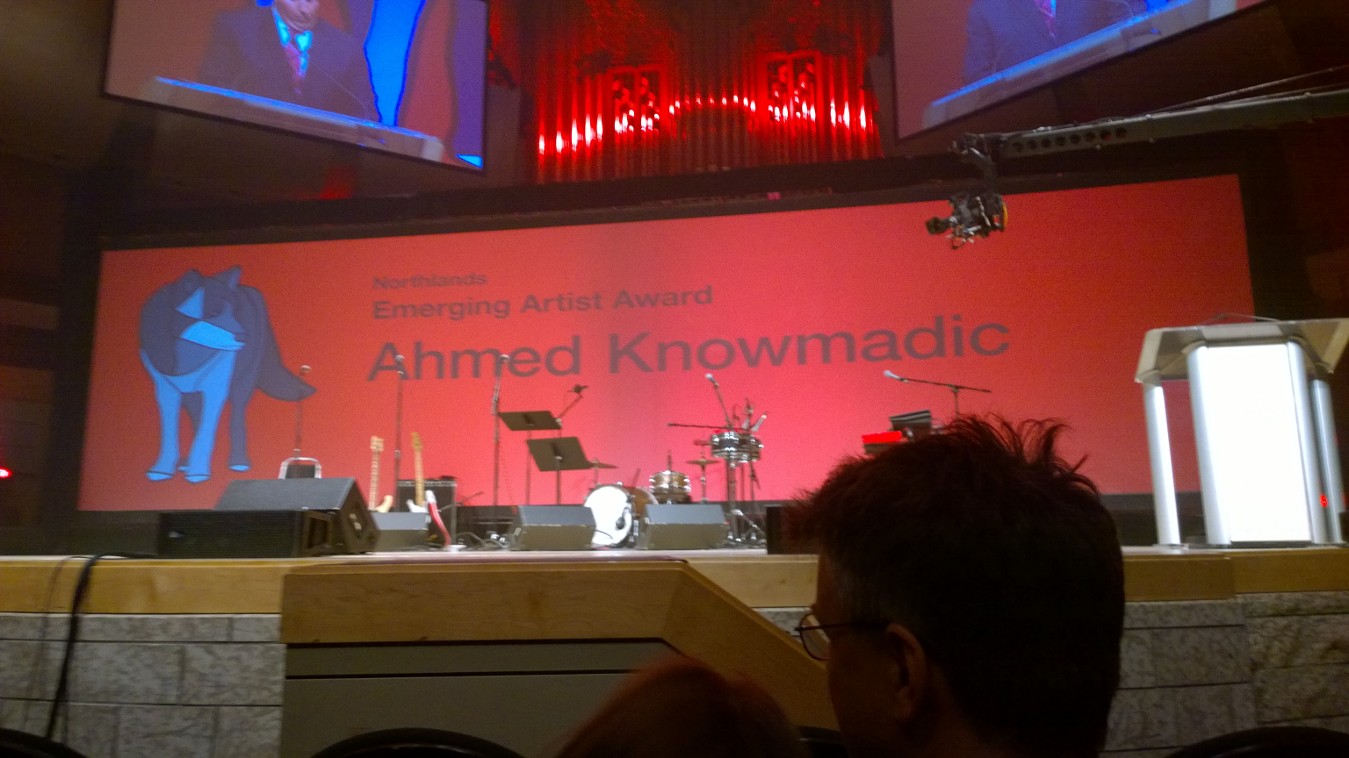



 “The most difficult challenges [were] the knowledge of where to go for the arts and also having the knowledge of how to deal with arts, ‘cause I don’t have the business mentality. I’ve never had anybody in my family who’s a successful artist, nobody in my culture that I knew directly that I could speak to who had any success,” he says. “Especially now that I’m doing spoken word poetry and it’s been a long time, there’s still barriers. People don’t look at me like, ‘Oh my God you’re a great writer!’ They look at me like, ‘Oh my God, a Muslim man who knows how to speak?’ I know it sounds ridiculous, but it almost comes off like that. It doesn’t come off like ‘Wow, great work!’ So there’s always that cultural barrier.”